How Long to Wear a Chastity Cage: Safe Duration Guide

How long should you wear a chastity cage?
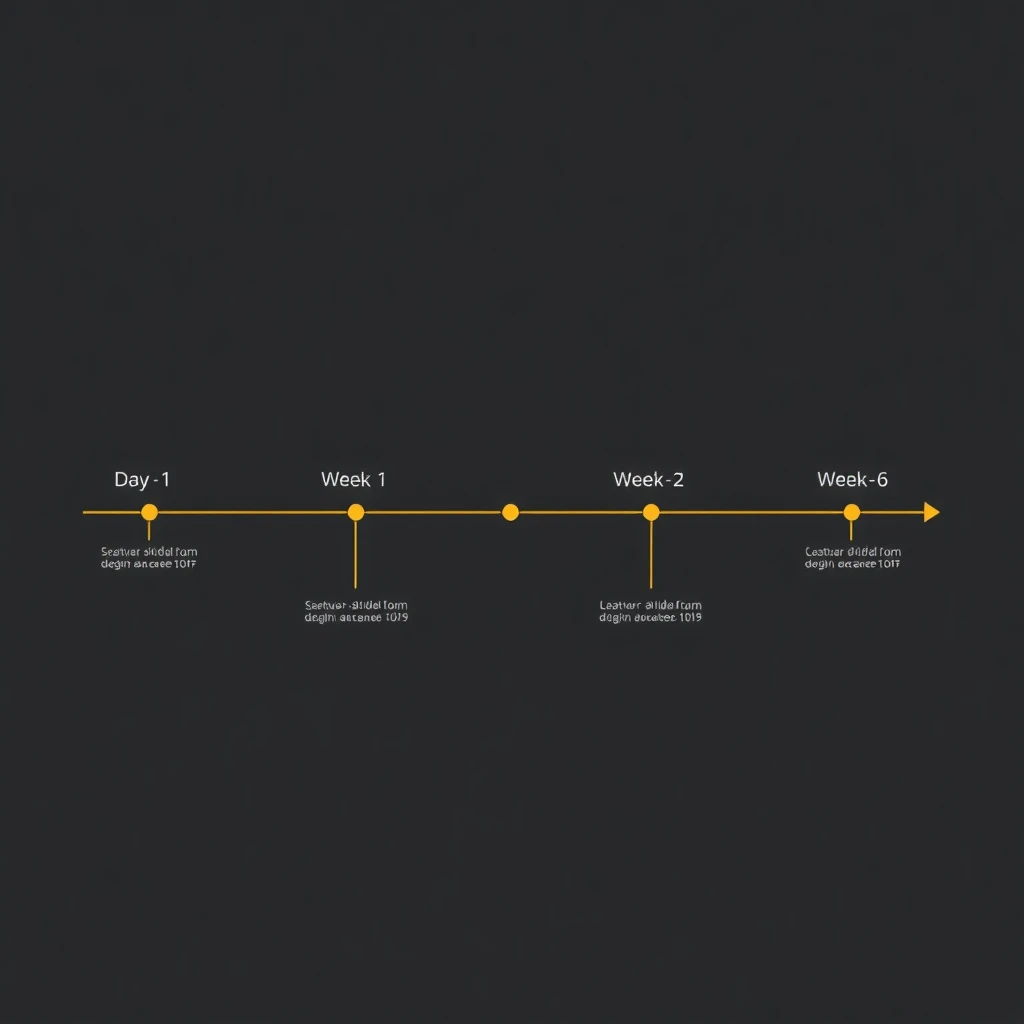
Start with 1-3 hours on Day 1 to verify fit. Build to 4-7 hours daytime across Week 1. Attempt overnight by Week 2-3 after your body adapts. Most people reach comfortable 24/7 wear by Week 4-6. The body needs a minimum of 10-14 days to physically adapt to the sensation, so rushing this timeline causes preventable discomfort and missed warning signs.
Week-by-Week Progression Timeline
The biggest mistake first-time wearers make is treating duration as a challenge to beat rather than a protocol to follow. Your body genuinely needs time to adapt — the skin toughens, the mind adjusts, and you learn what normal pressure feels like versus a warning sign.
This timeline integrates non-clinical reports from large online chastity communities — r/chastity, r/chastitytraining, and similar — alongside general tissue-adaptation physiology. No controlled clinical study exists for chastity device wear specifically; this is the best practical guide the evidence allows. There is no shortcut. Going too fast means you will not recognize early warning signs because everything feels uncomfortable anyway.
Day 1: Fit Verification (1-3 Hours)
Your first session is not about endurance. It is entirely about confirming the cage fits correctly before you invest more time in it.
Put the cage on, go about your day for one to three hours, then do a thorough assessment. Check the base ring: it should feel snug but not cut into skin. Check the cage tube: the tip of the penis should nearly touch the end without being crushed. There should be no pinching, no sharp edges rubbing skin raw, and no areas of the scrotum being pulled uncomfortably through the ring gap.
- Target duration: 1-3 hours
- Goal: Confirm fit, identify any immediate problems
- What to watch for: Any sharp pinching, immediate numbness, skin trapped under ring edges
- Decision point: If anything feels wrong, stop and reassess fit before proceeding
Do your first trial at home. Being away from a bathroom or private space when something goes wrong adds stress and delays your ability to remove the cage quickly if needed.
Days 2-7: Building Daytime Tolerance (4-7 Hours)
With fit confirmed, Week 1 is about building a daytime baseline. Add roughly 30-60 minutes per session, or add a session on alternating days. The exact increment matters less than consistency: you want your body to adapt to the sensation gradually rather than being shocked by long sessions.
By Day 7, most people can comfortably wear the cage for a full work day — 6-8 hours — with only minor adjustments needed at the half-way point.
- Day 2: 2-4 hours
- Day 3-4: 4-6 hours
- Day 5-6: 6-8 hours
- Day 7: Full daytime wear (8+ hours) if comfortable
Take the cage off at night during this week. Overnight wear introduces the complication of nocturnal erections before you have established a reliable sense of what normal daytime fit feels like. Solve daytime first.
Weeks 2-3: Approaching Overnight (12-16 Hours)
By the end of Week 1, consistent daytime wear should feel unremarkable. That psychological shift — from constant awareness to background noise — is your signal to start extending toward overnight wear.
Begin with extended evening sessions that overlap into early sleep hours. Go to bed with the cage on, with a clear intention to remove it if you wake up uncomfortable. Most people wake up 2-4 times during the first few nights from nocturnal erections. This is normal and discussed in detail in the overnight section below.
- Week 2: 10-14 hour sessions including sleep, key accessible nearby
- Week 3: Full overnight consistently, fine-tuning ring size if swelling occurs
- Target: 14-16 hours by end of Week 3
Never remove your cage less than once per week. Even if everything feels fine, weekly removal for a 20-30 minute skin inspection is non-negotiable. Check for redness, raw spots, developing calluses, or any change in skin texture under the ring.
Weeks 4-6: Extended and 24/7 Wear
Most people reach comfortable 24/7 wear capability somewhere in this range. "Comfortable" means you are not spending cognitive energy managing the cage — it has become ordinary.
24/7 wear does not mean never removing the cage. It means the cage is your baseline state and removal is scheduled rather than reactive. Daily cleaning still requires brief removal or at minimum cage-on rinsing (depending on your cage design). Weekly skin inspections remain essential.
| Phase | Target Duration | Key Goal | Removal Protocol |
|---|---|---|---|
| Day 1 | 1-3 hours | Fit verification | Remove after session |
| Days 2-7 | 4-8 hours/day | Daytime tolerance | Remove overnight |
| Weeks 2-3 | 10-16 hours | First overnight attempts | Key nearby; remove if painful |
| Weeks 4-6 | 24/7 capable | 24/7 baseline | Scheduled weekly inspection |
| Long-term | Continuous | Maintenance | Daily clean; weekly inspection |
Overnight and Sleep Wear
Sleeping in a chastity cage is a distinct challenge from daytime wear, and it deserves its own planning. The obstacle is not the cage itself — it is your body's normal nocturnal physiology interacting with the cage in ways that can wake you up repeatedly in the first week.
The Nocturnal Erection Problem
Most people experience 4-5 erections during sleep, occurring during REM cycles roughly every 90 minutes. Each lasts anywhere from a few minutes to 30 minutes. This is automatic nervous system activity — not arousal, not voluntary. Without a cage, you sleep through every one of them. With a cage, the restriction wakes you up.
This is the single biggest barrier to overnight wear for beginners. Understanding that it is physiologically normal — and that your brain will learn to filter it out — makes the adaptation far less alarming.
Here is what happens during the adaptation process:
- Nights 1-3: Wake up 3-5 times. Strong awareness of cage. Pressure sensation.
- Nights 4-7: Wake up 1-3 times. Sensation becoming familiar rather than alarming.
- Week 2: Brain begins filtering the sensation during lighter sleep stages.
- Week 3+: Most people sleep through erections. Occasional waking is normal indefinitely.
Your body does not stop having nocturnal erections. You simply stop waking up for them, the same way you eventually stop noticing a fan running or traffic outside your window.
Start your first overnight on a Friday or Saturday. The first few nights interrupt sleep reliably. Do not attempt your first overnight the night before an important work commitment.
Overnight-Specific Safety Check
The base ring is more likely to cause problems overnight than during daytime wear. When you lie horizontal for 7-8 hours, tissue can swell slightly due to fluid redistribution. A ring that fits snugly during the day can become restrictive at night.
Before your first overnight attempt:
- Lie down for 30 minutes while awake with the cage on. Does the ring still feel comfortable?
- If the ring leaves deep red marks lasting more than 10-15 minutes after daytime removal, it is too tight for overnight.
- Consider sizing up one ring size specifically for overnight, then returning to your daytime ring in the morning. Many experienced wearers maintain two ring sizes for exactly this reason.
Building to Full Overnight
Rather than committing to a full 8-hour night from your first attempt, try a progressive approach:
- Trial 1: Go to bed caged, key on the nightstand. Remove if you wake up uncomfortable. Even 3 hours counts as progress.
- Trial 2-3: Aim to make it to morning. Accept waking up as part of the process.
- Trial 4+: Full nights become routine. Adjust ring size if still having trouble after Week 2.
For a complete introduction to managing overnight wear as part of a broader beginner protocol, see our beginner's guide to chastity cages.
Safety Thresholds and What the Research Actually Says
One of the most important things to understand upfront: there is no peer-reviewed clinical literature specifically on safe chastity device wear duration. No medical institution has run a controlled study. What exists is general tissue health guidance, urological principles about genital circulation, and a large body of lived experience from the chastity community.
That is not a reason for alarm. It means you should understand the underlying principles rather than looking for a specific number stamped with medical approval.
The Compression Principle
The most relevant medical guidance comes from general principles about tissue compression. Devices that apply meaningful compression to soft tissue — restriction that limits blood flow — become problematic over extended periods. For devices with correct fit that apply restriction rather than resting compression, short-term continuous wear (up to 2-4 weeks) has not been associated with documented harm in the available literature — though no clinical body has formally evaluated chastity devices specifically.
A properly fitted chastity cage does not apply constant compression. It applies restriction. The distinction matters: restriction limits expansion (erections), while compression limits circulation at rest. A cage that causes persistent numbness, discoloration, or pain at rest is applying compression. That is a fit problem, not an inherent property of the device.
The Fit-First Principle
Every safety concern with extended chastity wear traces back to fit. The base ring is the highest-risk component. Too tight, and it restricts blood flow to the entire area it encircles. This is what can cause real harm. A correctly sized ring allows a finger to slide underneath it and produces no numbness, no color change, and no persistent soreness.
Honest note on the evidence base: The duration numbers in this guide — 1-3 hours Day 1, overnight by Week 2, and so on — are derived from community consensus and physiological first principles, not clinical trials. They represent what a large number of people have found works well. Individual variation is real. Some people adapt faster. Some have anatomical factors (skin sensitivity, circulation, ring size challenges) that require a slower progression or different approach.
Cleaning and Inspection Requirements
Duration and hygiene are inseparable. A cage that can be worn safely for 24 hours with daily cleaning might cause problems if worn for 48 hours without any cleaning. Establish your hygiene protocol as part of your duration protocol.
- Daily (minimum): Rinse through and around the cage with warm water. For open-bar cages, reach inside with a soft cloth or cotton swab.
- Weekly (non-negotiable): Full removal. 20-30 minutes minimum. Wash the cage and the skin thoroughly. Inspect every surface the cage contacts.
- When to extend the inspection window: If you notice any redness, irritation, or unusual odor during daily cleaning, remove the cage and do a full inspection immediately regardless of schedule.
For a complete cleaning protocol, see our cleaning and hygiene guide.
When 24/7 Wear Is Not Appropriate
Certain situations call for reducing wear time or stopping entirely, even after you have reached 24/7 capability:
- Active skin irritation, rash, or raw patches
- Any infection (urinary tract infection, skin infection) in or around the cage area
- Illness with fever — systemic illness affects circulation and healing
- Any medical procedure or examination involving the genital area
- Extended travel where you cannot maintain hygiene standards
Warning Signs: Remove Immediately
Learning to distinguish normal from concerning sensation is one of the most important skills in extended wear. Dull pressure, constant awareness, mild chafing in the first few days — these are expected. The following are not.
Stop and remove the cage immediately if you experience any of the following. Do not wait to see if it improves.
Circulatory Warning Signs (Urgent)
- Blue, purple, or mottled discoloration of any tissue within or behind the cage. This indicates impaired venous return (blood is not draining properly). It is serious and time-sensitive.
- Numbness or tingling anywhere in the caged area or in the inner thighs. These are nerve compression signs. Some tingling during an erection as you adapt is one thing; persistent numbness at rest is not.
- Visible swelling that was not there when you put the cage on. Tissue behind the ring puffing out noticeably means the ring is restricting return flow.
- Temperature change — tissue feels noticeably colder than your surrounding body temperature. Cold tissue has reduced blood supply.
Pain Warning Signs (Remove, Do Not Push Through)
- Sharp, persistent pain that is not position-dependent and does not ease when an erection subsides. Normal discomfort during an erection is pressure and stretch. Sharp pain is something different.
- Pain at the base ring that does not ease when you sit, stand, or lie down. Positional discomfort is normal. Constant pain is not.
- Burning sensation at the urethra that persists throughout the day. This can indicate the cage tip is pressing in an abnormal angle or that a UTI is developing.
Skin and Tissue Warning Signs (Remove for Inspection)
- Rash, hives, or blistering under the ring or on any skin in contact with the cage. This may indicate a material allergy or contact dermatitis. Identify the material and assess whether you need a different cage.
- Open sores or broken skin. Even small abrasions under the ring can become infected quickly in a moist, enclosed environment. Allow full healing before resuming wear.
- Persistent redness that does not fade within 30 minutes of removal. Superficial ring marks that disappear quickly are normal. Deep, lasting red marks that take more than 30 minutes to fade indicate excessive pressure.
- Unusual odor despite regular cleaning. This can indicate bacterial overgrowth, early infection, or skin breakdown. Inspect the skin thoroughly.
First-week discomfort is normal, but it is not the same as warning signs. When you are new to wearing, everything feels unusual — the weight, the ring pressure, the awareness when sitting. This general discomfort is expected and fades. The warning signs above are specific, localized, and typically involve either pain that does not ease or circulatory changes. When in doubt, remove the cage. You can always try again tomorrow.
Wear Duration by Goal
Not everyone pursuing chastity wear has the same goal. The week-by-week timeline above is the full progression to 24/7 capability — but you may not need that. Here is how to calibrate your timeline to what you are actually trying to accomplish.
| Goal | Min. Prep Time | Target Duration | Key Challenge |
|---|---|---|---|
| First Weekend Trial | 3-5 days daytime wear | 48-72 hours continuous | Fit confidence before committing |
| Work-Week Wear | 3-4 weeks progression | 16-20 hours/day | Desk comfort + work-night sleep |
| 24/7 Extended | 3+ weeks full progression | Continuous | Daily hygiene discipline |
| Solo / Self-Keyholder | Same as above | Self-defined | Psychological pressure management |
Goal: First Weekend Trial (48-72 Hours)
You want to experience extended chastity for a defined period, then return to normal. This is the most common starting goal and is entirely achievable for a first-time wearer — with preparation.
Do not attempt a 48-72 hour continuous trial on your first ever day of wearing. Spend Days 1-5 on the standard daytime progression to confirm fit and build basic tolerance. Your first weekend trial should happen after you have already worn the cage for 6-8 hours comfortably in a single session.
- Minimum preparation: 3-5 days of daytime wear, up to 6 hours
- Hygiene plan: Daily cleaning (in-cage rinse) with cage removal for inspection at 24 hours
- Have a plan for removal: Keep the key accessible. If something hurts, you remove it. The weekend trial is not worth ignoring warning signs.
- Choose a quiet weekend: Physical activity and extended sitting (long car journeys, bike rides) are harder to manage until you know how your body responds
Goal: Regular Work-Week Wear (5+ Days)
You want to wear the cage during work hours and sleep, removing on weekends or at defined points. This typically falls in the 16-20 hour per day range on work days.
By following the standard progression timeline, most people reach this comfortably by Week 3-4. The practical challenges at this level are: sitting for long periods at a desk (cage positioning), using public restrooms (sitting urination required), and managing the overnight component on work nights when sleep disruption has real consequences.
- Desk sitting: Adjust positioning every 1-2 hours. The cage should not be pressing uncomfortably into the chair.
- Public restrooms: Sitting is the practical approach. This is a mindset adjustment, not a physical one.
- Work-night sleep: Solve the overnight component on weekend nights first. Only extend to work nights once you are sleeping reliably through the night.
Goal: 24/7 Extended Wear
You want the cage to be your permanent baseline, removed only for cleaning, inspection, and specific activities. This is achievable for most people who follow the progression protocol, and is sustainable long-term with proper hygiene.
The average time to reach genuinely comfortable 24/7 wear is around 6 weeks following the standard timeline, though the range is 3-12 weeks depending on individual physiology, cage choice, and fit quality. People who rush the timeline and try to jump to 24/7 in Week 1 typically encounter preventable problems that set them back further than if they had progressed gradually.
- Required foundation: Minimum 3 weeks of daytime + overnight wear before continuous 24/7
- Hygiene protocol: Daily cleaning every single day without exception. Weekly inspection removal.
- Long-term monitoring: Skin condition changes gradually with extended wear. Check for callus formation under the ring, any change in sensitivity, or skin texture changes.
- Activity adjustments: Vigorous exercise, cycling, and swimming each require their own adaptation strategies. Many people remove the cage for these activities even in 24/7 protocols.
The 6-week number is an average, not a deadline. If you reach Week 8 and overnight wear is still disrupting sleep significantly, that is a fit issue to solve — likely a ring size problem — not a sign that 24/7 wear is not achievable for you.
Goal: Solo Chastity (Self-Keyholder)
Everything above applies — with one additional risk that no other goal has: you are your own safety check, and you are also the person most motivated to push past it.
The pattern goes like this: you set a goal of 72 hours, hit 60 and notice the ring feels tight, and talk yourself into finishing because stopping feels like failure. That reasoning has put people in urgent care. The goal was 72 hours of safe wear, not 72 hours regardless of what your body is telling you.
Write the warning signs list on a piece of paper and tape it somewhere you will see it during a session — not buried in a guide you have to go find. Set a recurring weekly calendar alert: "Cage off. Skin check. 20 minutes." Make it boring and automatic.
Recovery Protocol: What to Do If You Pushed Too Far
It happens. You went longer than your body was ready for, or you ignored a minor warning sign that became a bigger problem. Here is what to do.
Immediate Steps
- Remove the cage. Without guilt or hesitation. The point of the protocol is to make extended wear sustainable long-term, not to maximize any single session.
- Inspect the skin thoroughly. Look at every surface that was in contact with the device. Note any redness, raw spots, or changes.
- Wash gently with mild soap. Do not scrub irritated skin. Pat dry.
- Allow full healing before replacing the cage. For minor irritation, this means 24-48 hours of cage-free time. For any open skin or significant chafing, wait until it is fully healed.
When to See a Doctor
Ring soreness and superficial chafing resolve on their own — remove the cage, clean the area, leave it alone for 24-48 hours. These four situations are different. Do not wait them out:
- Numbness or circulation problems that do not clear within 30 minutes of removal
- Signs of infection: worsening redness, heat, discharge, or any fever
- Pain that does not ease after the cage is off
- Urinary symptoms: burning on urination, difficulty starting, or blood in urine
Go to a GP or urgent care and describe what happened plainly. Urologists and GPs see intimate health concerns routinely — yours will not be the first, and it will not be the last.
Restarting After Recovery
After a rest period, restart at a lower duration than where you stopped — not where you want to be. If you made it to Week 3 before a problem forced a break, restart at Week 1-2 levels and rebuild. Your skin and tissue need to re-adapt after a gap, even a short one. Treat the restart as an investment in a longer sustainable practice.
References
- [1]National Institutes of Health. Nocturnal penile tumescence overview: frequency, duration, and physiological role in adult males. MedlinePlus Medical Encyclopedia. — MedlinePlus / NIH
- [2]Suresh M, et al. "Tourniquet effect and genital strangulation: principles of tissue compression and ischemia in soft-tissue structures." Journal of Clinical Urology, 2019. General tissue compression principles applied to ring-type constrictive devices. — Journal of Clinical Urology
- [3]American Academy of Dermatology. Contact dermatitis: causes, symptoms and treatment. AAD clinical guidelines 2022. — American Academy of Dermatology
- [4]Meston CM, Buss DM. "Why humans have sex." Archives of Sexual Behavior, 2007. Background on sexual health physiology and autonomic erection mechanisms relevant to nocturnal erection cycles. — Archives of Sexual Behavior
- [5]Note: No peer-reviewed clinical literature exists specifically on safe chastity device wear duration. Duration guidance in this article is based on general tissue health principles, urological guidance on constrictive devices, and documented community experience. — Editorial note — LockedCage
Frequently Asked Questions
On Day 1, wear the cage for 1-3 hours only. The goal is not endurance — it is fit verification. After 1-3 hours, remove the cage and inspect the skin thoroughly. Look for any pinching, redness that does not fade, or numbness. Only proceed to longer sessions once you have confirmed the fit is correct and comfortable.
Yes, after proper preparation. Attempting overnight wear before 2-4 weeks of daytime adaptation is premature for most people. The main challenge is nocturnal erections — typically 4-5 per night — which wake you up when the cage restricts them. The body adapts to this within 1-3 weeks. Start overnight attempts after consistent 8-hour daytime sessions feel unremarkable.
The average is around 6 weeks following a gradual progression timeline, though the realistic range is 3-12 weeks. People who rush to 24/7 in the first week typically encounter preventable problems that delay their progress. Follow the week-by-week protocol: daytime wear in Week 1, overnight in Weeks 2-3, extended sessions in Weeks 4-6.
At minimum, perform a daily rinse with the cage on using warm water and mild soap. Once per week, remove the cage completely for 20-30 minutes for a thorough skin inspection and full cleaning of both the device and the skin. This weekly inspection is non-negotiable regardless of how long you are wearing continuously.
Immediate warning signs of a too-tight cage include: sharp pain that does not ease when an erection subsides, numbness or tingling in the genitals or inner thighs, blue or purple discoloration, visible swelling behind the base ring, and ring marks that take more than 30 minutes to fade after removal. If you experience any of these, remove the cage immediately.
There is no documented evidence of permanent damage from properly fitted chastity devices worn with regular removal for inspection. The conditions that cause harm — prolonged circulation restriction, untreated skin infection, ignoring numbness — are all preventable with correct fit and a hygiene protocol. The risks increase significantly when warning signs are ignored or when the cage is never removed for inspection.
About the Author
Alex Devereaux is a sexual wellness educator with over 8 years of experience reviewing intimate products. Their writing combines hands-on product testing with research-backed guidance to help readers make informed choices.
Certified Sexual Health EducatorRelated Guides
Chastity Cage Beginner's Guide: Buy, Size & Wear Safely [2026]
8 years testing 40+ cages distilled into one guide: sizing steps, 14-day break-in schedule, duration guide for beginners to experienced couples, budget picks from $30.
How to Measure for a Chastity Cage (3 Steps) [2026]
47% of buyers get the wrong size. This 10-minute 3-step method prevents painful mistakes. Ring size chart, cage size table, and free interactive calculator.
Metal vs Silicone vs Resin: Chastity Cage Materials Guide
Expert comparison of chastity cage materials including stainless steel, medical-grade silicone, resin, and plastic. Learn which material suits your needs for comfort, security, and hygiene.
Not Sure Which Cage Is Right for You?
Take our 60-second quiz to get personalized cage recommendations based on your experience level, budget, and preferences.
Take the Quiz